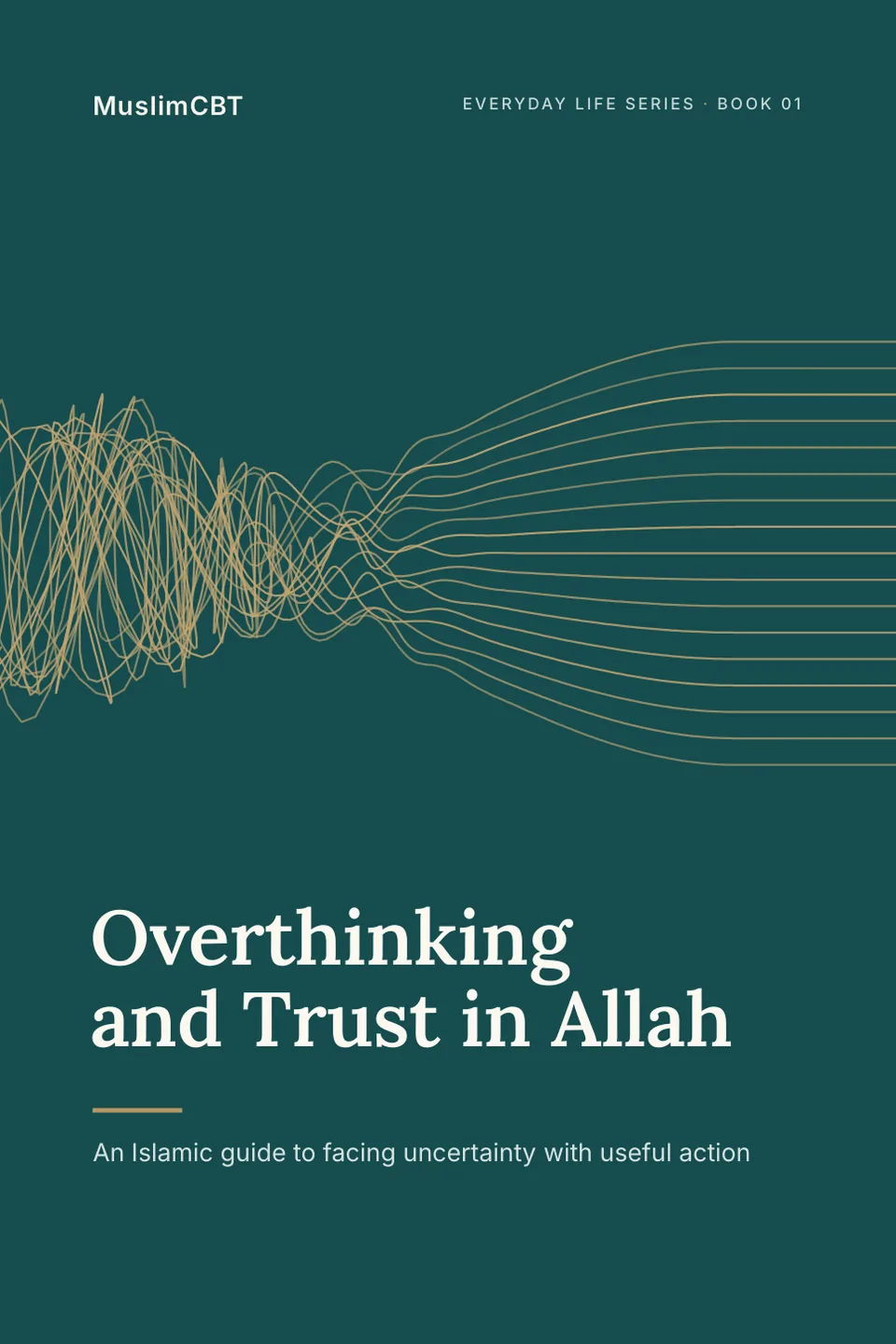
The Everyday Life Series, book 1 of 3
Overthinking and Trust in Allah
An Islamic guide to facing uncertainty with useful action
For the loop of checking, rehearsing and imagining the worst. Six short chapters on telling a fact from a prediction, sorting what belongs to your effort, and bringing the worry to Allah while you act.
- 41-page PDF
- Download straight after payment
- Six chapters and a seven-day plan
Or get all three books for $8.99 and save $2.98.
How the book begins
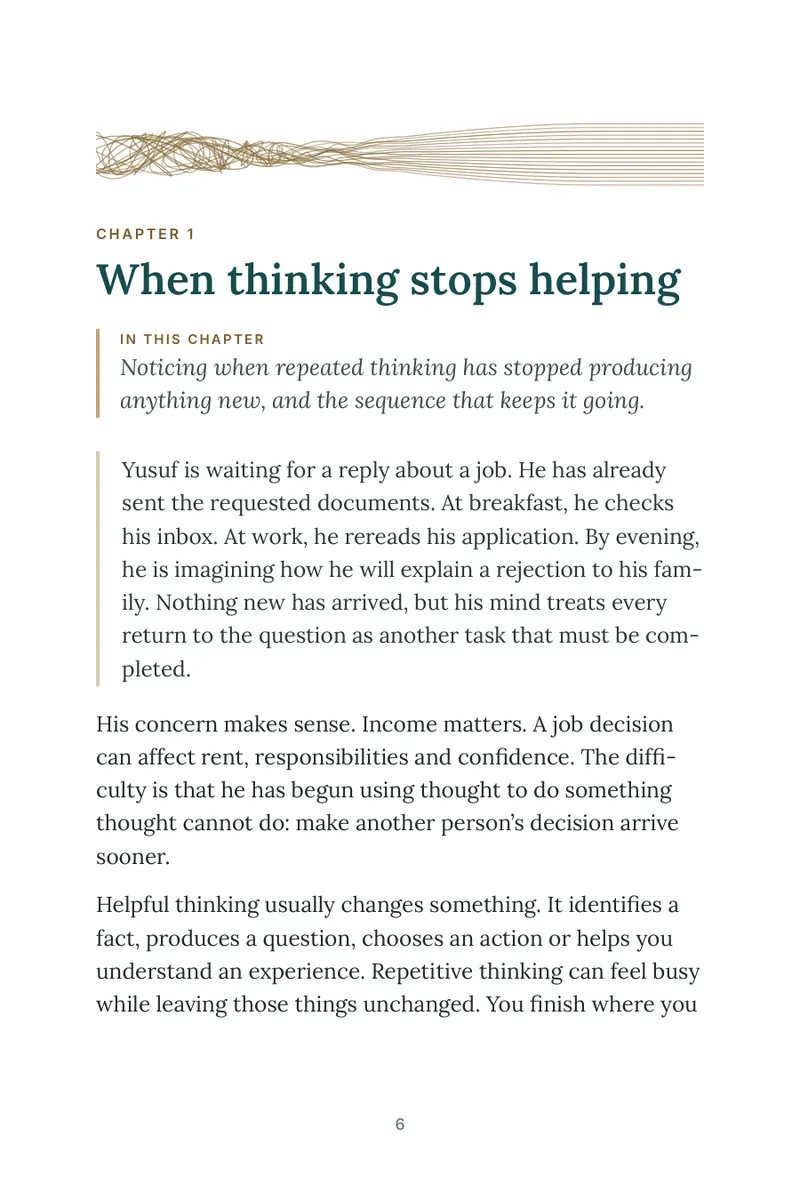
You may have opened this book after another evening spent trying to settle a question that would not stay settled. Perhaps you checked a message several times, rehearsed a difficult conversation, or imagined what would happen if an important plan failed. You are tired, yet stopping feels irresponsible. Surely one more round of thinking will help.
This book offers a way to respond when thinking becomes repetitive and stops helping you live. You will practise noticing a worry, identifying what actually needs attention, and taking a manageable step. Islamic reflections accompany the exercises because your relationship with Allah matters within ordinary life, including its uncertain parts.
There is no promise that you will finish these pages with a silent mind. A more useful aim is to recognise a familiar loop a little sooner and spend less of your day obeying it.
Helpful thinking usually changes something. It identifies a fact, produces a question, chooses an action or helps you understand an experience. Repetitive thinking can feel busy while leaving those things unchanged. You finish where you started, often with more imagined possibilities to investigate.
What you’ll practise, chapter by chapter
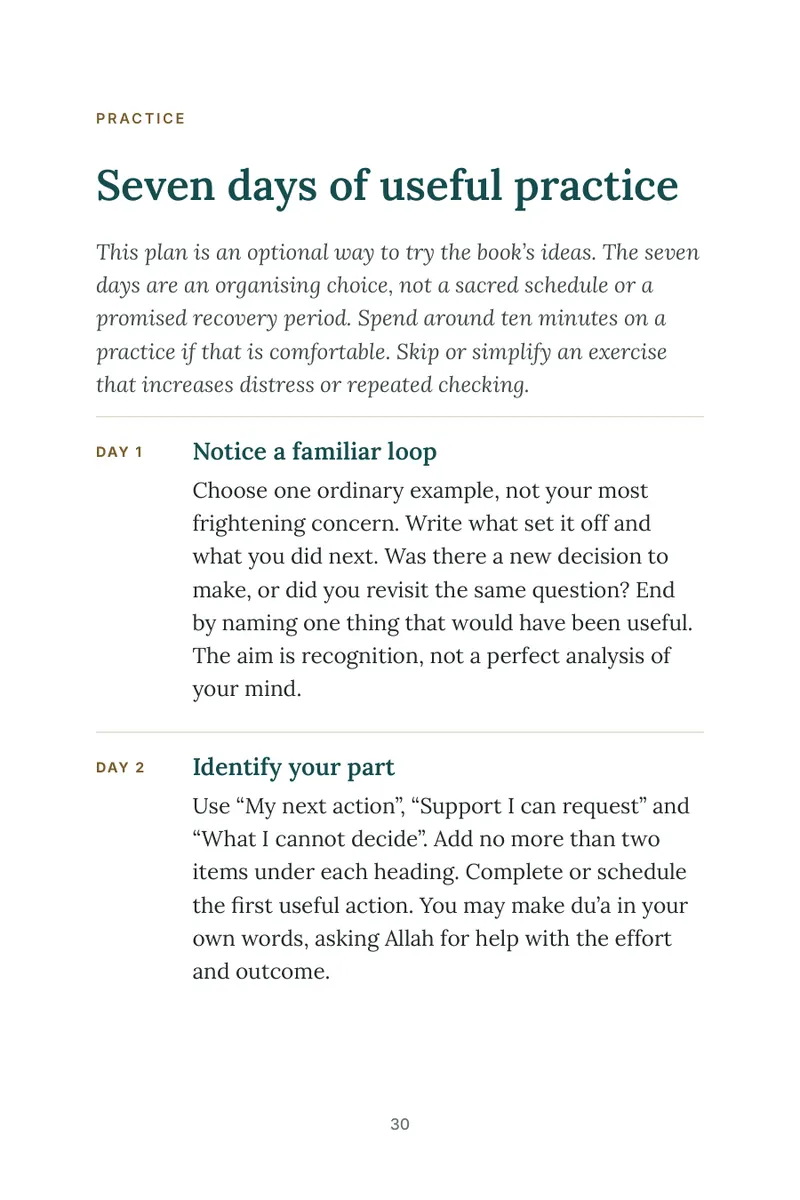
Each chapter opens with an everyday example and ends with an optional practice. The book closes with a seven-day plan, writing pages, common questions and source notes.
When thinking stops helping
Noticing when repeated thinking has stopped producing anything new, and the sequence that keeps it going.
What belongs to your effort
Sorting what your effort can reach from what it cannot decide.
Separate the fact from the prediction
Keeping what you know apart from what you predict, and making your response believable.
Learn from the past without living inside it
Giving a review of the past a clear purpose, and allowing disappointment some room.
Let worship and daily care support you
Keeping worship and everyday care in their proper places when worry is still present.
Make room for life while uncertainty remains
Asking for suitable help and returning to meaningful activity while a question is still open.
Read a few pages first
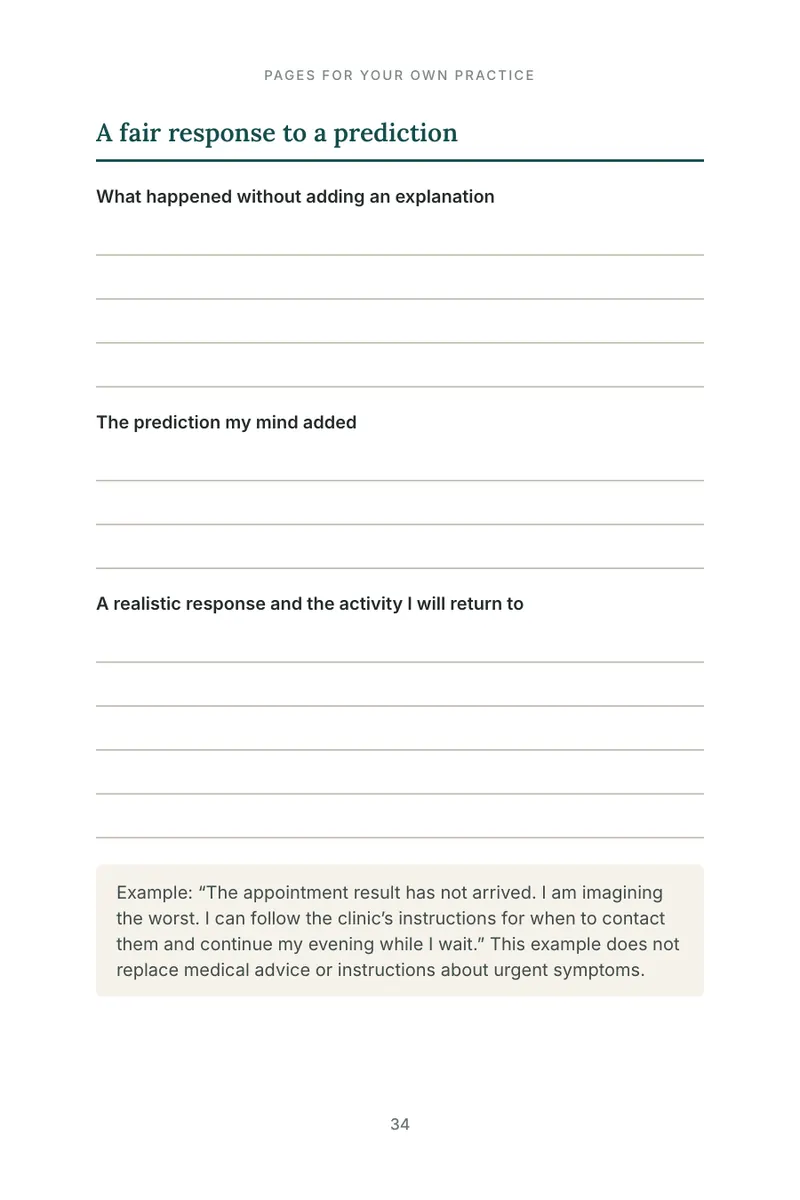
Five real pages from the book, at a size you can actually read. Use the list to move between them, or open any page full screen.
Try one minute of the method
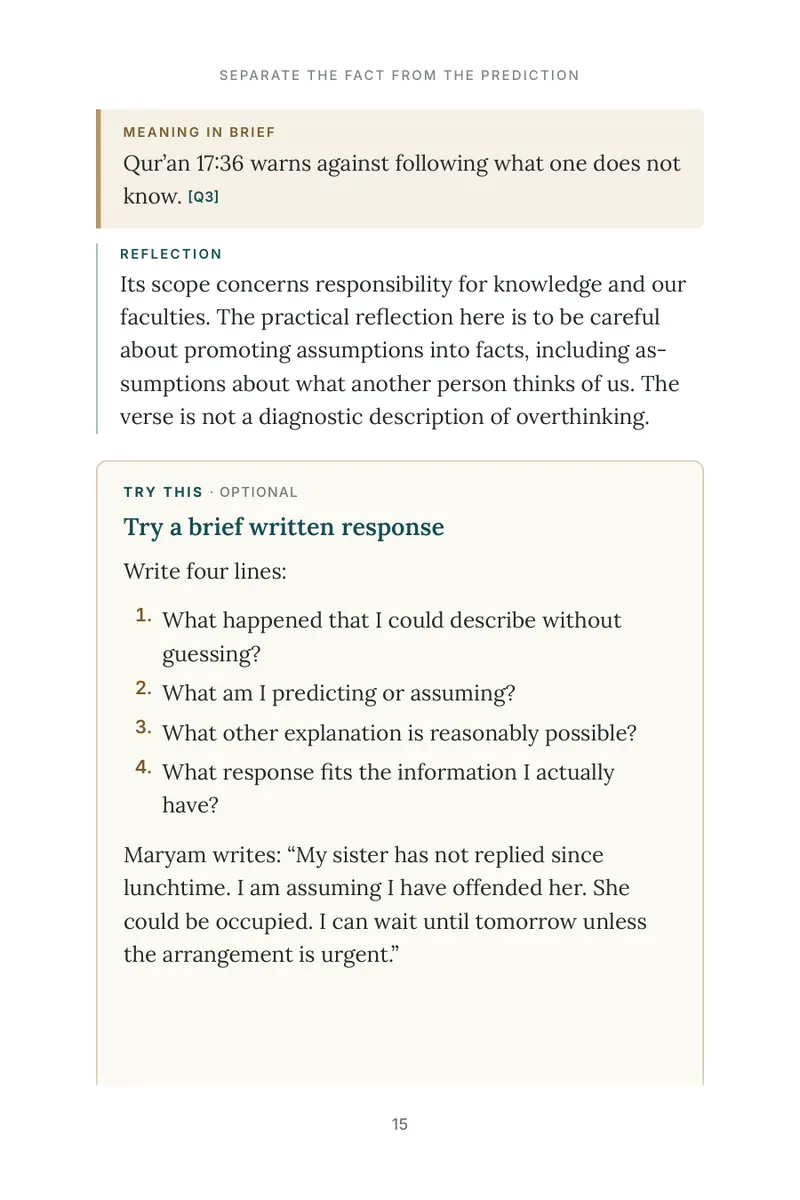
From Chapter 3. Maryam messaged her sister about a family visit. Hours later there is no reply, and this is what goes through her mind.
Strong feelings pick one explanation and treat it as confirmed. Separating what you know from what you predict gives you something proportionate to do.
Tap each part that is a prediction, not something Maryam actually knows.
- 1What happened, described without guessing?
My sister has not replied since lunchtime.
- 2What am I predicting or assuming?
I am assuming I have offended her.
- 3What other explanation is reasonably possible?
She could be occupied.
- 4What response fits what I actually know?
I can wait until tomorrow unless the arrangement is urgent.
Is it right for you?
It was written for you if
- You check, re-read and rehearse long after it has stopped helping.
- You want to act responsibly without waiting to feel certain first.
- You want tawakkul explained alongside practical effort, not instead of it.
Please don’t rely on it alone for
- Worry, panic or checking that substantially disrupts your sleep, worship or daily life.
- Repeated rituals or reassurance-seeking, which may need an OCD-informed assessment.
The book explains when to seek a qualified professional or scholar. When self-help is not enough
Questions about this book
Will this stop my overthinking?
It does not promise a silent mind. It helps you recognise a familiar loop a little sooner and choose a useful next step while some questions stay open. If worry, panic or repeated checking is seriously disrupting your sleep, worship or daily life, please speak to a qualified professional as well.
How do I get the book after paying?
Checkout is handled by Gumroad. Your PDF is ready to download as soon as payment goes through, and Gumroad emails you a link so you can download it again later.
What format is it, and can I read it on my phone?
Each book is a 6 × 9 inch PDF with a clickable contents page and bookmarks. It reads comfortably on a phone, tablet or computer, and the writing pages can be printed.
Is this therapy or a religious ruling?
No. These are educational self-help books for adults. They do not diagnose or treat any condition and they are not fatwas. Each book says clearly when a difficulty needs a qualified professional or scholar.
Has the series been reviewed?
The Everyday Life Series has not been reviewed or endorsed by any religious or clinical body. Every Qur’an verse and hadith it refers to is summarised in plain English, labelled as a summary, and linked so you can read it in full.
How do refunds work?
Read the cancellation and refund policy for how to request a refund. You can email us with your Gumroad receipt.